- Oberhöchstadter Str. 8, 61440 Oberursel
- 06171 591 91
- Am Salzhaus 6, 60311 Frankfurt am Main
- 069 920 380 90

- Oberhöchstadter Str. 8, 61440 Oberursel
- 06171 591 91
- Am Salzhaus 6, 60311 Frankfurt am Main
- 069 920 380 90
One Abdominoplasty – medical Abdominoplasty – is a surgical procedure to tighten the abdominal area. During the procedure, we carefully remove or redistribute excess skin and fatty tissue and, if necessary, tighten the abdominal muscles.
The result: a flat, toned abdomen with a harmonious silhouette, while fully preserving the body's natural shape.
The procedure is recommended when the skin and connective tissue no longer retract, typically after pregnancies or significant weight loss. If the rectus abdominis muscles have separated, they can be brought back together during the same procedure; exercise alone cannot close this gap. A lift differs fundamentally from liposuction: Liposuction targets fat in skin that retains its elasticity, whereas a lift addresses the excess skin itself. The procedure leaves a scar in the lower abdomen, which is usually covered by underwear. The consultation takes place in Frankfurt, and the surgery in Oberursel.
Advantages · Who is it for? · Comparison of Options · Procedure · Aftercare Timeline · Risks · Costs · Alternatives · Team · FAQ · Date
After pregnancy, the abdominal wall sometimes stays stretched, with stretch marks; after major weight loss, an apron of skin can hang down that liposuction cannot remove, because it consists mostly of skin and connective tissue. The mini, full and vertical-horizontal tummy tuck differ in how far the excess skin extends and where the scars are. Surgery is done under general anesthesia and takes 1.5 to 3.5 hours depending on the type, with one to three nights in the hospital. Health insurance may contribute if the procedure is medically necessary.

Medically reviewed ✓
Written by Dr. med. Zeynep Potente
Specialist in Plastic and Aesthetic Surgery
✓ Member of the DGPRÄC (German Society of Plastic, Reconstructive, and Aesthetic Surgeons)
EBOPRAS – European Board of Plastic, Reconstructive and Aesthetic Surgery - ebopras.eu
✓ Over 20 years of experience in plastic surgery
✓ Specialization: Body Contouring and Tummy Tucks
📅 Last updated: August 11, 2026
⭐⭐⭐⭐⭐ 5.0 on Google · over 300 more reviews on Jameda
✓ Member of the DGPRÄC (German Society of Plastic, Reconstructive, and Aesthetic Surgeons)
✓ Our own certified operating rooms in Oberursel
✓ A toned, well-defined core – Excess skin and tissue are removed
✓ Restoring Abdominal Muscles – Rectus diastasis can be corrected
✓ Long-lasting – The results are long-lasting with a stable weight
✓ Improved Body Contour – A slimmer waist and more balanced proportions
✓ Medically sound as well – For excess skin accompanied by inflammation or limited mobility
✓ Cesarean section scars can be corrected – Old scars can often be removed as well
✓ Can be combined – Ideal in combination with liposuction, a breast lift, or other body treatments
✓ A Better Quality of Life – Finally wearing clothes that make me happy again
If you have sagging skin after pregnancy
The skin stretched significantly during pregnancy and has not fully returned to its original state. The abdominal wall sags, stretch marks are visible, and the rectus abdominis muscles have separated (rectus diastasis). Exercise can strengthen the muscles, but it cannot correct sagging tissue or separated muscles.
If you have excess skin after significant weight loss
You’ve reached your target weight—a tremendous achievement. But your skin has lost its elasticity and can no longer retract. This leaves sagging folds of skin, often referred to as a “fat apron,” even though they consist mainly of excess skin and connective tissue. Exercise and diet can no longer help in this case.
When is a medical evaluation advisable?
For very extensive body contouring procedures—especially after significant weight loss—or if you have chronic conditions such as diabetes, we recommend a preliminary internal medical examination. We work closely with experienced specialists to ensure your safety.
| Klein | Large | Vertikal-horizontal | |
|---|---|---|---|
| Main Objective | Excess skin only on the lower abdomen | Sagging of the entire abdomen | Excess skin after significant weight loss, including folds on the sides |
| Duration of surgery | 1.5–2 hours | 2.5–3.5 hours | 2.5–3.5 hours |
| Cutting Technique | Horizontally across the pubic line | Horizontally across the pubic line | Horizontally across the pubic line and vertically along the midline |
| Belly button | Remains in position; is not moved | Stays in place; cut around | Stays in place; cut around |
| Muscle Tightening | Optional in the lower abdomen | Complete toning of the abdominal muscles is possible | Complete toning of the abdominal muscles is possible |
| Anesthesia | General anesthesia | General anesthesia | General anesthesia |
| Hospital Stay | 1–2 nights | 2–3 nights | 2–3 nights |
| Recovery time | 2–3 weeks | 2–4 weeks | 2–4 weeks |
| Special Features | A C-section scar can be corrected | Comprehensive tightening all the way to the rib cage | Lateral tightening and waist contouring are possible; vertical scar along the midline |
| Costs starting at | 6.000 € | 6.500 € | 6.500 € |
We take the time to listen to you. During a detailed consultation, we’ll discuss your needs, examine your abdominal area, and create a personalized treatment plan.
What we'll discuss:
Minor tummy tuck:
We make a horizontal incision just above the pubic hairline. The skin between the navel and the incision is loosened, excess skin and fat tissue are removed, and the abdominal wall is tightened downward. The navel remains in its original position. If necessary, we tighten the muscles in the lower abdomen.
Extensive abdominoplasty:
The incision also runs horizontally above the pubic line. An incision is made around the navel and it is detached from the skin. The abdominal skin is dissected over a large area up to the rib cage. The separated rectus abdominis muscles are brought together along the midline and secured. Excess tissue is removed and the skin is tightened downward. The navel stays in place and is stitched back in through a new opening in the skin.
Vertical and horizontal abdominoplasty:
After significant weight loss, excess skin often extends laterally as well—the skin then forms folds on the sides. A purely horizontal incision cannot address this. In addition to the horizontal incision above the pubic line, we therefore make a vertical incision along the midline. This allows the abdomen to be tightened laterally as well, creating a defined waistline. The procedure otherwise follows the same steps as the large abdominoplasty. The vertical scar runs down the midline and cannot be concealed by underwear.
Where will the surgery take place?
In our own certified operating rooms in Oberursel (Oberhöchstadter Str. 8). From preoperative preparation through the surgery to the recovery room—everything under one roof.
General anesthesia: A tummy tuck is usually performed under general anesthesia so that you can sleep peacefully throughout the entire procedure and feel nothing.
Our specialist in anesthesiology, Dr. med. Livia Köhler, will personally care for you throughout the entire surgery.
The First 48 Hours: Hospital Stay and Rest
After the surgery, you will stay at our clinic for 1 to 3 nights for observation. During the first 48 hours, drains will be inserted to remove wound fluid. You will receive pain medication and injections to prevent blood clots as a precaution. Rest is especially important during this phase. A compression garment will be put on immediately after surgery to support shaping and healing. Keep your upper body slightly elevated.
Days 3–7: Mobilization and First Steps
Starting on the third day, you will become increasingly mobile. The drains are usually removed after 5 to 7 days. Short walks are important to promote blood circulation and prevent blood clots. You should still walk with a slight bend in your knees to avoid putting strain on the incision.
Week 2: Suture Removal and Increased Mobility
The stitches are removed after about 14 days. You’ll feel increasingly comfortable and can shower again. You should continue to wear the compression garment consistently. Light daily activities are possible, but you should avoid heavy lifting (over 5 kg).
Weeks 3–6: Returning to Everyday Life
Most patients are able to return to work after 2 to 4 weeks, depending on the physical demands of their job. You’ll wear the compression garment day and night for a total of 6 to 8 weeks. Swelling gradually subsides. You’ll be able to walk more upright again and move more and more normally.
Sports, Sun, and Sauna: Take a 6–8-week break
Give your body at least 6 to 8 weeks off from intense exercise and abdominal workouts. Light walks are possible sooner. You should avoid saunas and swimming pools for at least 6 weeks. Especially important: Protect the scars from direct sunlight and consistently use a high-SPF sunscreen with SPF 50 or higher.
The final result after 6–12 months
The full, final results of your tummy tuck will be visible after 6 to 12 months—by then, healing will be complete, the swelling will have subsided completely, and the scars will have faded. You’ll be able to fully enjoy your toned, defined abdomen.
As with any surgical procedure, there are potential risks associated with a tummy tuck. We will discuss these with you in detail:
Common (temporary):
Rare:
Very rare:
Our experienced team minimizes these risks through precise surgical techniques, personalized planning, and close follow-up care.
The costs depend on the individual diagnosis, the scope of treatment, and any additional services.
| Performance | Costs starting at |
|---|---|
| Minor Tummy Tuck | 6.000 € |
| Extensive Abdominoplasty | 6.500 € |
| Vertical and horizontal abdominoplasty | 6.500 € |
| Additionally: Liposuction of the flanks | approx. 1,500–2,500 € |
| Additionally: Abdominal muscle tightening (rectus diastasis): | including |
| Hospital Stay | 500 € per night, not included in the surgery price |
| General anesthesia | 1,000 €, not included in the surgery price |
Included in the price
In addition to the price
Coverage by Health Insurance Plans When Medically Necessary
If your excess skin leads to demonstrable health problems, treatment may be medically necessary. In this case:
We would be happy to advise you on this matter and provide you with all the necessary documents.
Alternatives to Surgery
Surgery isn't always necessary. Depending on the findings, other treatments may also be helpful:
More about non-surgical treatments
Useful Combinations
The results can often be improved with complementary treatments:
We provide honest, personalized advice—only what truly suits you and meets your needs.

You will stay at the clinic for 1–3 nights. After 2–4 weeks, most patients are able to return to work, depending on the physical demands of their job. You can resume exercising after 6–8 weeks.
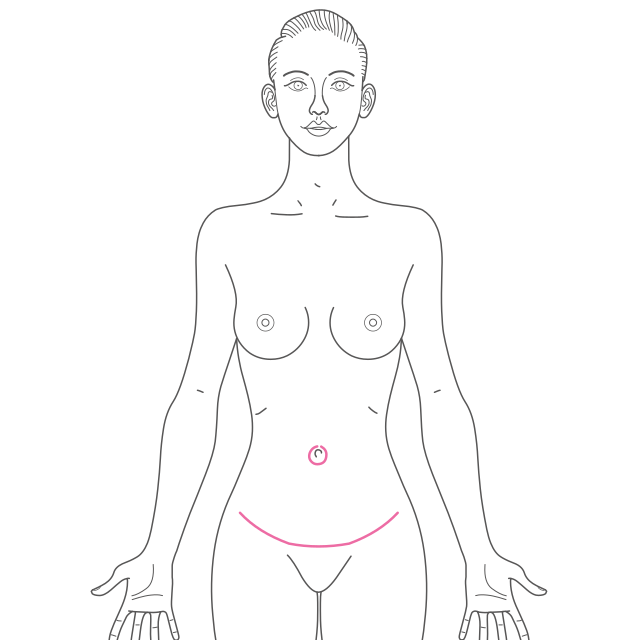
Yes, a tummy tuck does result in scars. The horizontal incision runs just above the pubic hairline and can be concealed by underwear and swimwear. In addition, a small scar remains at the navel. The scars fade significantly within a year, but they do not disappear completely.
In most cases, this is a cosmetic procedure that you will have to pay for yourself. If the procedure is medically necessary (e.g., chronic inflammation under a skin flap, severe limitations in movement), you can apply to have the costs covered. We will assist you with the necessary documentation.
If you maintain a stable weight and a healthy lifestyle, the results are permanent. However, another pregnancy or significant weight gain can cause the abdominal wall to stretch again.
Yes, it is possible to become pregnant after a tummy tuck. However, we recommend waiting to have the procedure until you have finished planning your family, as pregnancy can affect the results.
You won't feel anything during the surgery because you'll be under general anesthesia. After the surgery, it's normal to feel some tightness and moderate pain, which can be easily managed with medication. Most patients describe the pain as bearable.
There is no minimum age, as long as you are physically healthy and your weight is stable. Most patients are between the ages of 30 and 60. It is important that you have realistic expectations and are well-informed.
OP duration: 1.5–3.5 hours (depending on the scope)
Type of anesthesia: General anesthesia
Hospitalization: 1–3 nights as an inpatient
Incapacity for work: 2–4 weeks (depending on the job)
Sport: after 6–8 weeks
Scarring: Horizontally across the pubic line, at the navel
Shelf life: Sustained at a stable weight
Costs: Starting at 6,000 €
Acquisition of a pharmacy: Possible if medically necessary
Follow-up care included: Yes, all follow-up appointments
Write to us! We will be happy to advise you!