
What Is Lymphedema | Lymphatic Surgery
A chronic Lymphedema can be based on Tumor Surgeries, surgeries on Lymph nodes, infectious disease, or congenital malformation of the lymphatic system. The condition takes a toll on those affected both physically and psychologically and limits their quality of life. The symptoms of the condition can be effectively managed through conservative measures such as manual Lymphatic drainage and compression therapy, but they do not prevent the progression of the disease. Surgical therapy has evolved over the years with the use of Microsurgery . We now have curative surgical treatment options available.
Information on the operation
We have three surgical approaches for treating chronic lymphedema:
- Free microsurgical lymph node transplantation
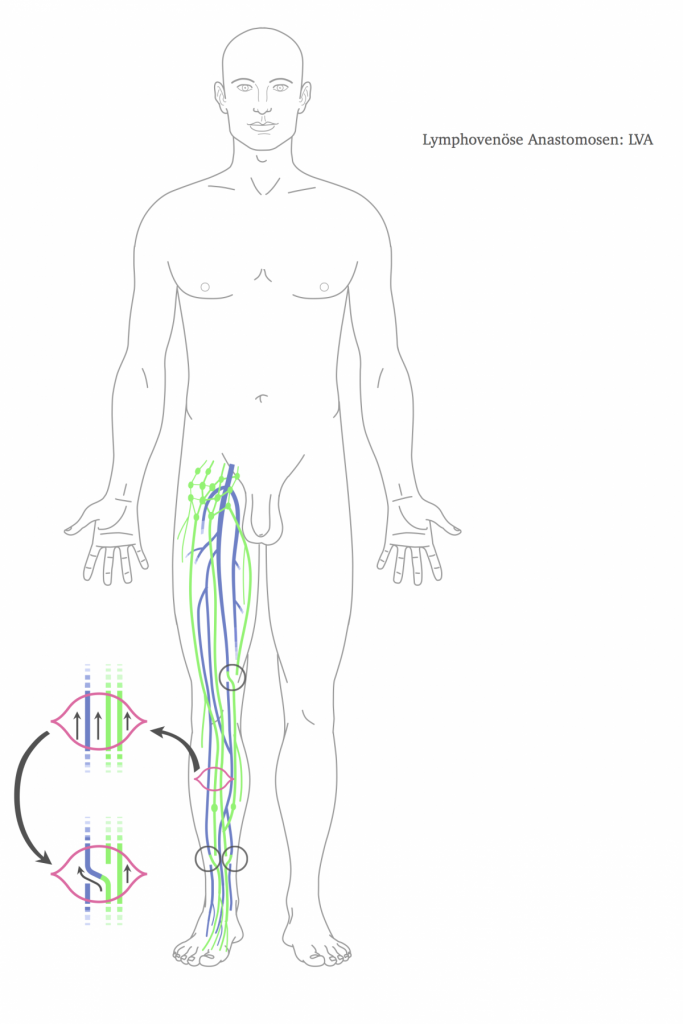
- lymphovenous anastomosis
- Body Contouring Through Liposuction
Free Microsurgical Lymph Node Transfer
In free microsurgical lymph node transplantation, a small number of lymph nodes are transplanted from the lateral chest wall or neck to the lymphedema region. The lymph nodes are connected to an artery and a vein. These are then microsurgically connected to the recipient site under a surgical microscope (see figure). Connection to the lymphatic system is not necessary. Lymphatic drainage then occurs through the formation of new lymphatic vessels, which is stimulated by growth factors.
Lymphovenous Anastomosis
In lymphovenous anastomosis, the lymphatic vessels are visualized using a fluorescent dye (ICG) and PDE Camera . Subsequently, microsurgical anastomoses between lymphatic vessels and veins can be reconstructed via small incisions, thereby restoring lymphatic drainage. The vessels have a very small diameter (<1 mm), so this surgery must also be performed under a surgical microscope.
reduction through Liposuction
Liposuction of the lymphedema is another reliable method of reducing the circumference and swelling of the limb.
Hospital stay and anesthesia
General anesthesia and an inpatient stay are required for free microsurgical lymph node transplantation and liposuction.
If desired, lymphovenous anastomosis can be performed on an outpatient basis under local anesthesia.