- Oberhöchstadter Str. 8, 61440 Oberursel
- 06171 591 91
- Am Salzhaus 6, 60311 Frankfurt am Main
- 069 920 380 90

- Oberhöchstadter Str. 8, 61440 Oberursel
- 06171 591 91
- Am Salzhaus 6, 60311 Frankfurt am Main
- 069 920 380 90
Botulinum toxin type A is a protein produced by the anaerobic bacterium Clostridium botulinum. When purified and administered in low doses, this neurotoxin offers significant medical benefits. Injected in small amounts, it relaxes the facial muscles attached to the skin, thereby smoothing out wrinkles.
Botulinum toxin type A inhibits the release of the neurotransmitter acetylcholine at the neuromuscular junction and leads to reduced muscle activity after 3–4 days. This aesthetic injection corrects excessive facial movements and thereby addresses the root cause of wrinkle formation. The medication is administered in such a low dosage that it acts only locally and does not enter the bloodstream. Unlike an injectable treatment with hyaluronic acid, this treatment does not add volume: it targets wrinkles caused by muscle movement, not those that are present at rest. The treatment takes place at our practice in Frankfurt.

Medically reviewed ✓
Written by Dr. med. Zeynep Potente
Specialist in Plastic and Aesthetic Surgery
✓ Member of the DGPRÄC (German Society of Plastic, Reconstructive, and Aesthetic Surgeons)
EBOPRAS – European Board of Plastic, Reconstructive and Aesthetic Surgery - ebopras.eu
✓ Over 20 years of experience in plastic surgery
✓ Specialization: Facial surgery and aesthetic treatments
📅 Last updated: August 17, 2026
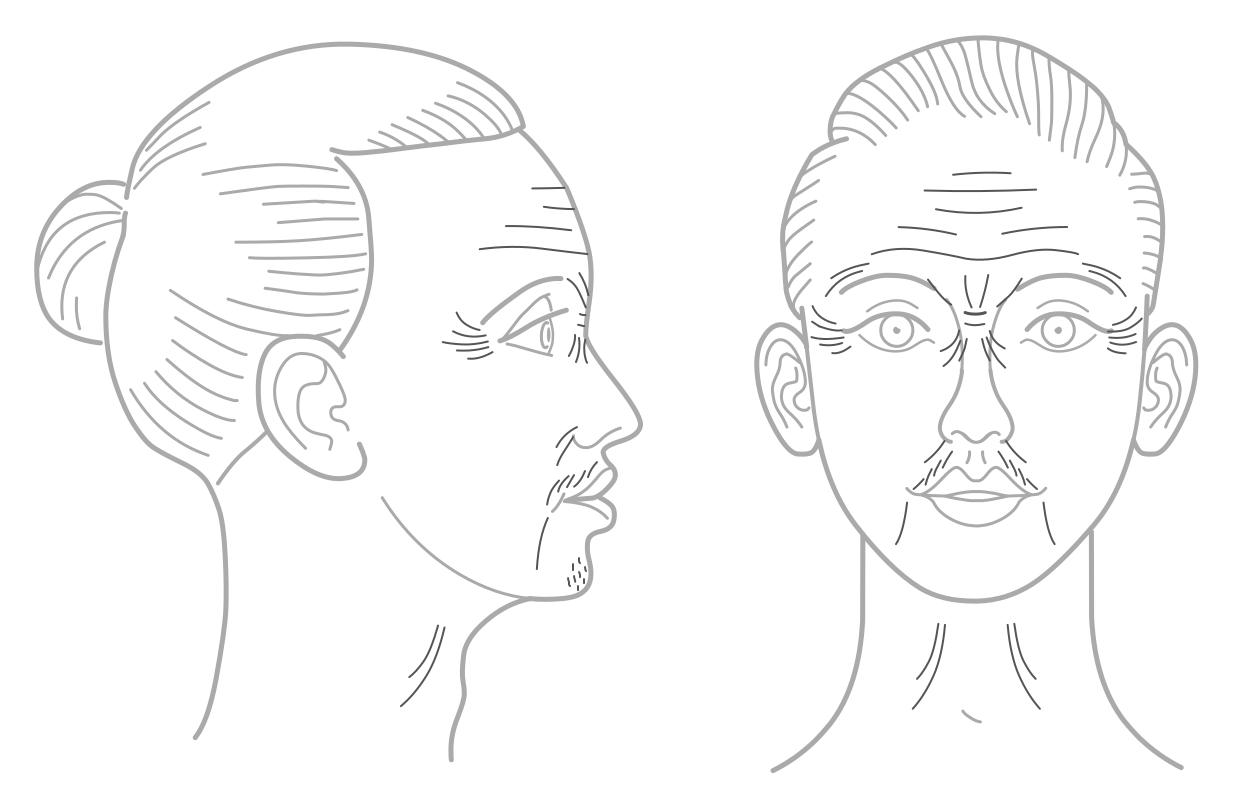
During a consultation, we’ll discuss which areas concern you and what results we can achieve with the treatment. We place particular emphasis on preserving your natural facial expressions so that you don’t end up with an unnatural look. The glabellar lines (frown lines) are particularly well-suited for botulinum toxin type A injections. The horizontal forehead lines and crow’s feet are other common treatment areas. Botulinum toxin type A is also used to treat excessive sweating (Hyperhydrosis) and teeth grinding (Bruxism). The injection needle is so fine that the injections are barely noticeable. The full effect of the toxin is achieved after 14 days and lasts 3–4 months.
Treatment with botulinum toxin type A is generally associated with few complications.
Occasionally, mild bruising, swelling, and localized redness of the tissue may occur. However, these symptoms resolve completely.
Write to us! We will be happy to advise you!